
No products in the cart.
Machine sewing stretch fabric requires precision and care. Unlike fabrics such as cotton or wool, stretch fabric tends to lose its shape during sewing. This is especially true for jersey. To avoid ruining it, SewShop recommends familiarizing yourself with the fabric before sewing it.
A stretch fabric stretches in at least one direction. It is described as mono-elastic if it stretches in only one direction and bi-elastic if it stretches in both. Knitted fabrics, such as jersey, usually possess a certain degree of elasticity due to their structure.
A higher percentage of elastomer can increase elasticity. However, different fabrics may react differently even with the same percentage. Jersey can be thin and highly elastic. Stretch sweatshirt fabric, on the other hand, is often thicker and less elastic, and may require different adjustments.
The first step is to choose the needle based on the thickness and weight of the stretch fabric. SewShop recommends a jersey needle or a stretch needle. The rounded tip of the jersey needle penetrates the knit without damaging its structure. The stretch needle is particularly suitable for technical stretch fabrics and Lycra.
A needle that is unsuitable for the fabric may break or skip stitches. It is therefore advisable to use specific needles and replace them frequently. SewShop offers Schmetz needles for stretch and jersey fabrics, Singer 2045 needles for knit fabrics, and a Schmetz stretch twin needle—all available in the sewing machine needle catalog. Avoid sewing over pins, as they can damage the needle.
Attention
Stretch fabric deforms easily. The wrong needle can ruin it. Choose a specific needle for jersey.
Sewing stretchy fabric such as jersey on a sewing machine is difficult because the machine may skip some stitches. There is a solution. First of all, you need patience, even if the job takes longer.
If you don’t already have one, get a professional sewing machine. The Singer Heavy Duty 4523, for example, features 11 stretch stitches and sews jersey, Lycra, and stretch fabrics.
Use the TRIPLE STITCH for your sewing projects. On the machine described, it is indicated by the letter A under the S1 stitch series. The TRIPLE STITCH sews each stitch three times, so you don't have to worry about missing any stitches.
On delicate fabrics, use a stitch such as the stretch tricot stitch or a narrow zigzag. Both accommodate the fabric's stretch without breaking the seam.
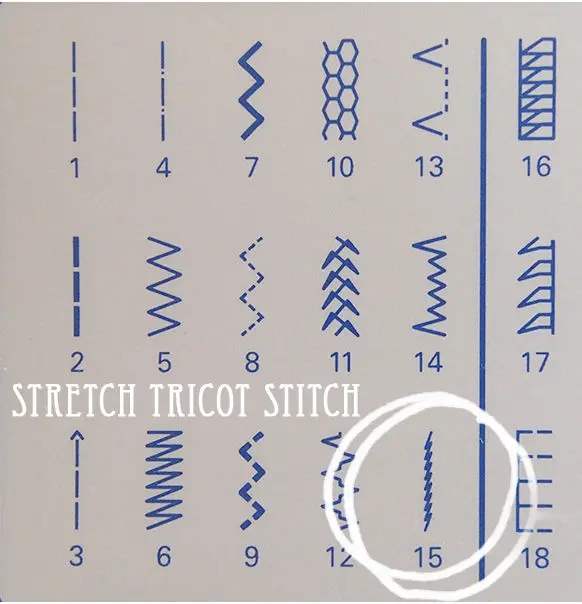
An alternative is the overlock stitch, if the machine has one. A straight stitch works well for side seams, shoulders, and legs when elasticity isn't required. For waistbands, cuffs, and necklines, a zigzag stitch is preferable.
Before sewing the garment, test the stitch on a scrap of the same fabric. This is a particularly useful habit for beginners. Based on the test, adjust the zigzag width and length, thread tension, and presser foot pressure. There is no single setting that works for all fabrics; the result also depends on the thread and the machine.
For stretch fabrics, a strong polyester thread is required. Cotton thread can snap, and with standard thread, a straight stitch may break when the seam is pulled. A specialized, flexible thread, however, allows for the use of a straight stitch with approximately 4 stitches per centimeter.
If the upper thread is too tight, the fabric may pucker. SewShop recommends consulting the machine's manual. Once the issue is identified, adjust the tension gradually until you achieve an even stitch.
While sewing, guide the fabric without pushing or pulling it. Pulling it can distort the seam or break the needle. It is easier to guide it gently at low speeds.
If the machine feeds the fabric poorly, the integrated dual feed found on some models solves the problem perfectly.
If you don't have an integrated dual-feed system, try using a walking foot; it advances the layers more evenly. A roller foot also helps with smooth feeding.
Placing masking tape under the presser foot can facilitate smooth movement, provided the foot's needle and thread holes remain unobstructed. Tissue paper placed between the presser foot and the fabric can help minimize puckering and can be torn away after sewing.
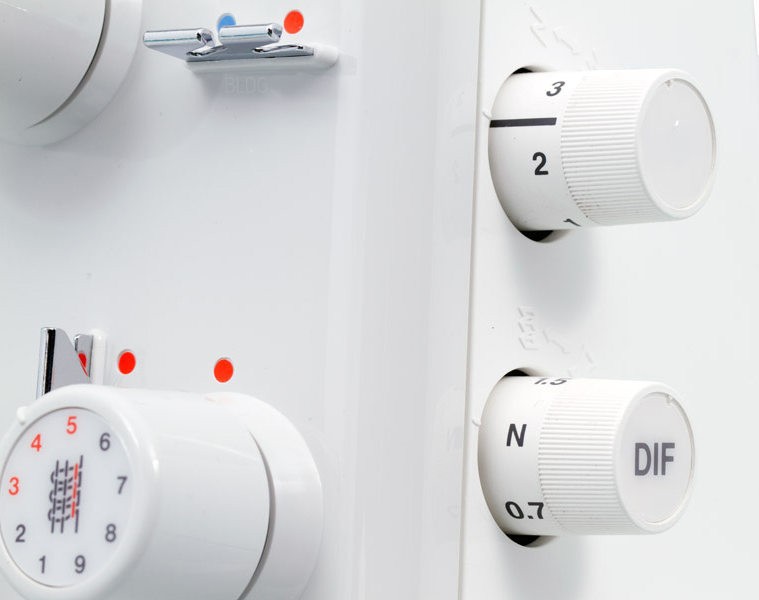
The overlocker features differential feed: when properly adjusted, it helps prevent unwanted wavy edges. The differential feed on the Juki MO-654DEN eliminates rippling in fabrics like jersey; the Juki MO-654DEN overlocker can handle technical and stretch fabrics for creating sportswear.
For elasticized hems, you can use a stretch twin needle. It requires two upper threads. It creates two parallel rows of stitching on the right side and a zigzag stitch on the wrong side. If you don't have a twin needle, a simple zigzag stitch is sufficient for the hem.
Jersey and sweatshirt fabric edges do not fray and do not necessarily require finishing. If you do want to finish them, use a zigzag stitch. Using a few extra pins helps hold down edges that tend to curl.
Before cutting, wash and dry the fabric to prevent the garment from shrinking later. Then, leave it hanging or laid flat until it regains its shape. A rotary cutter and cutting mat provide a clean cut for stretch fabric.
To mark jersey fabric, a rolling chalk pen glides over the material without dragging it—unlike traditional pencils or chalk. Ball-point or very fine pins are needed to secure the pieces, whereas clips hold them in place without leaving holes.
Don't forget to press the seams once the work is finished. It is an important step. Stretch fabric sewn with a triple stitch risks tearing, but pressing the seams prevents this issue. The seams settle into place, and your garment will look perfect.
Insert a jersey or stretch needle and use polyester thread. Select the triple stitch, a stretch stitch, or a narrow zigzag. Test it first on a scrap of the same fabric, guiding it without pulling. Sew at a slow speed and, if necessary, use a walking foot.
The elastic tricot stitch and the narrow zigzag stitch accommodate the fabric's stretch without breaking the seam. In contrast, a straight stitch made with standard thread can snap when the seam is pulled.
You need a strong polyester thread to pair with a stretch needle. Cotton thread can snap when used on stretch fabrics. A specialized flexible thread also allows for straight stitching.


