
No products in the cart.
On October 1, 1926 appeared in the Vogue magazine, un capo che sarebbe in seguito diventato una vera e propria icona di stile e che ancora oggi persiste e persisterà nei secoli dei secoli, sua maestà il tubino nero.
La sua ideatrice? Donna che ha rivoluzionato la moda del novecento, stanca delle costrizioni imposte dalla società anche per quanto riguarda l’abbigliamento femminile. Si, lei, Coco Chanel, chi altri sennò?
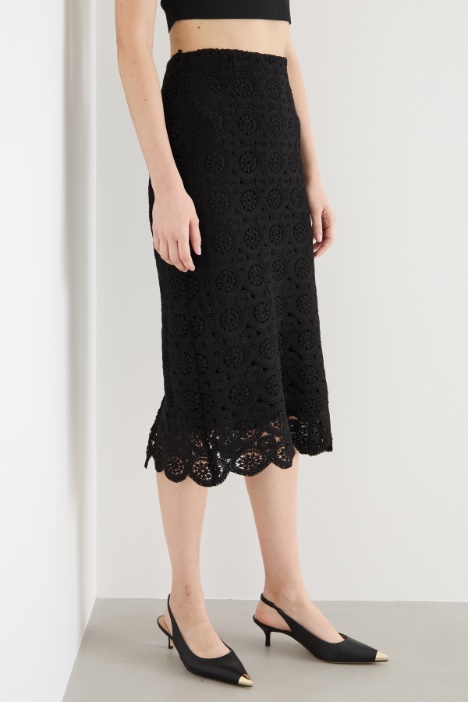
Let's face it, the little black dress always saves. Suppose we have to attend an important event, we do not want to look too casual, but neither did Marie Antoinette during the ceremony of the first meeting with Louis VI!
The black sheath dress of course! Thank you from the bottom of my heart, Chanel, On behalf of all of us.
If there is a material that denotes class and femininity, this is undoubtedly the macramé.
La definizione che ne da Wikipedia è “intreccio raffinato e grazioso”. E infatti a guardare capi con questo tipo di pizzo, fa subito pensare a eleganza e charme.
I macramé dresses recall Houte Couture, the lightness of the fabric, however, does not make it heavy. A macramé dress, as we have said, is a symptom of sophistication but, without coming across as plastered or too set when we wear it.
In this article we will look at how to make a macramé sheath dress.
Primarily with the help of a tape measure, prendi le misure esatte del tuo modello, una volta terminato con le misure, dovrai prendere il tessuto a metraggio.
Do you have the fabric? Well, lay it out on a table and with pattern paper and chalk you are going to draw the outline of the front and back of the back, of your garment. The template will need, later, to be cut out. You will also need to do some light basting.
Cut the lines you drew above the pattern, ricorda di lasciare almeno 1,5 cm di stoffa per le cuciture.
Per il retro le operazioni da eseguire sono le stesse, ritaglia e lascia uno spazio sufficiente per le cuciture. Se desideri aggiungere maniche al tuo tubino, sappi che queste andranno inserite dopo.
Take another paper pattern and with chalk draw the lines for the sleeves, after which proceed to cut out. The sleeves will be sewn on later, at the sheath dress junction.


