
No products in the cart.
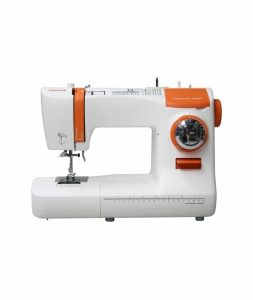
Switching from needle and thread by hand to a sewing machine or change the one you already own: whatever the motivation for making a new purchase, here are some features that should be considered before choosing. After the discussion of the features, some tips for those who have already chosen a machine, with some features that allow you to assess the quality of the product purchased.
In the choosing a sewing machine there are many parameters that need to be evaluated. We propose some that are not always taken into proper consideration.
Let us start with the weight of the machine. This feature might not seem important, but it becomes so in case the machine does not have a fixed location and needs to be moved, even if for short distances. Keep in mind that the weights of the machines vary widely, with some models weighing between nine and ten kilograms, while the lightest ones can weigh as much as the 50% of the heavier models.
A second important factor for machines that are used in different locations is the presence of a housing capable of protecting the machine and its components. Although not essential, the presence of a guard allows the sewing machine to last longer, as it protects it from shocks and external agents.
Another aspect that is often underestimated when choosing a machine is the noise it makes. This parameter is important for everyone, but it is especially so for those who intend to sew for an extended period of time. The lower the noise of the machine, the greater the pleasure of using it.
In addition to the more physical characteristics of the machine, it is also essential to evaluate its technical specifications. A first aspect to consider is the number of different stitches that can be made. The variety of products on the market is truly remarkable; in fact, we go from machines capable of doing a few basic stitches to more complex ones with dozens of settings for different stitches.
Let us now deal with an aspect that is also of interest to those who already own a machine, namely, what is possible with the machine itself.
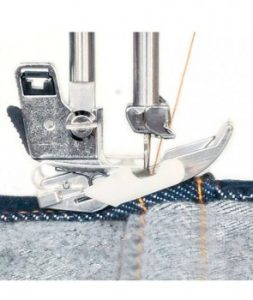
Very useful from this point of view is the Ability to sew thick or overlapping fabrics together. This may seem like a common feature, but in fact even some of the most famous brands struggle with this type of stitching!
Another technical possibility that can be checked on one's machine is the ability to make seams on synthetic and stretch fabrics without difficulty. Here again, the point made earlier applies: even the most emblazoned brands sometimes do not guarantee this capability.
A ’last feature to consider when evaluating one's sewing tool is a practical test that everyone will have to undergo sooner or later, the sewing of a zipper or zipper. In addition to the skill of the person using the machine, the quality of the machine also greatly affects the result that can be achieved. Trying out different sewing machine models to believe.


