
No products in the cart.
The serger (or overlock machine) is a special type of sewing machine designed to create edge finishes and seams on one or more layers of fabric. Thanks to its built-in blades, the machine trims away excess fabric while threads wrap around the edge, preventing fraying. Essentially, it cuts, sews, and finishes edges in a single step—a process known as overlocking.
Most sewing machines allow for basic edge finishing using stitches that interlock the bobbin thread and the spool thread around the edge. Sergers (overlock machines), by contrast, use at least two loopers fed by thread cones mounted on the machine stand, eliminating the need to load a bobbin. This system produces stronger seams and a more refined, professional finish.
Overlock stitches are formed using 2 to 5 threads simultaneously. The simplest way to classify them is by the number of threads used. A common configuration involves four threads, two needles, and two loopers; with a single needle, the machine operates using three threads. Each of these stitches has its own advantages and uses, described below.
Two-thread operation requires disengaging one looper and is available only on certain models. This stitch helps sew and edge cotton fabrics, attach elastic and lace to lingerie, create flat seams, and finish edges and hems. It is primarily suited for very lightweight materials.
Created using two threads to form a rolled hem, it is suitable for decorative hems on chiffon, silk, and wedding dresses. In the flat-lock version, it also allows two pieces to be joined with a flat seam allowance.
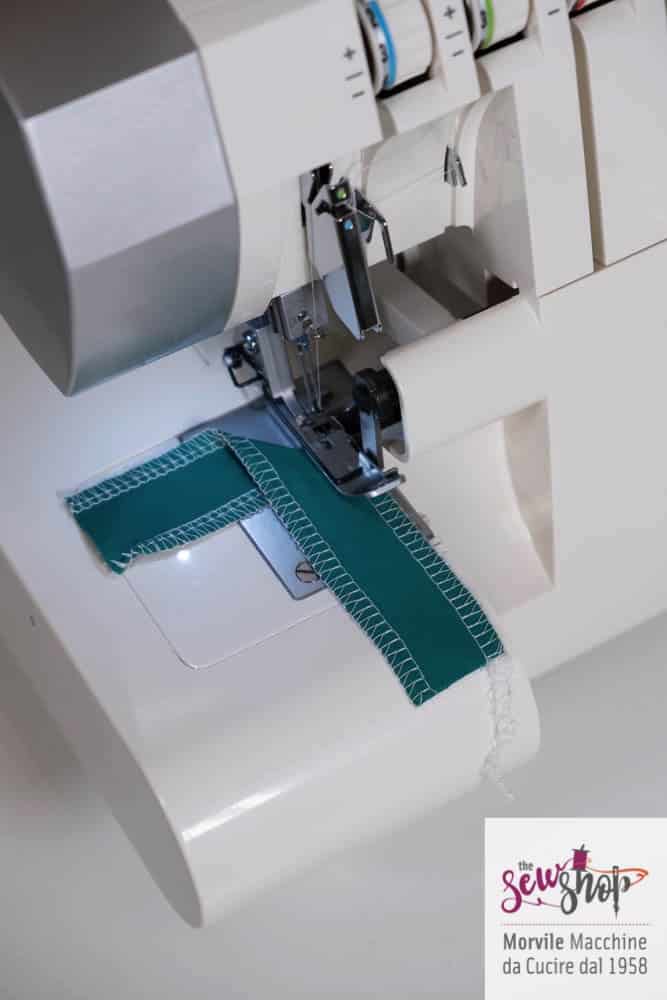
The 3-thread overlock stitch is the most commonly used option for finishing edges. It uses a single needle: the right needle produces a narrower stitch, while the left produces a wider one. Like the 2-thread stitch, it allows for sewing knit or woven garments and creating decorative seams. It is also suitable for sewing pintucks and creating narrow rolled hems. 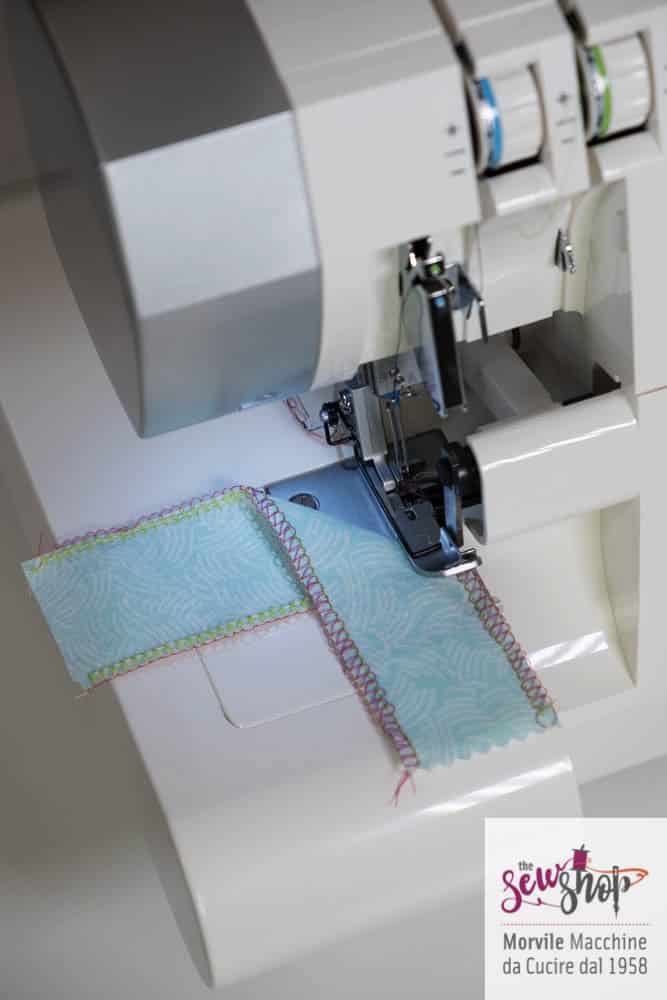
For sewing areas subject to high stress, SewShop recommends the 4-thread overlock stitch. The needles form two parallel lines near the edge, while the upper and lower looper threads pass over and under the fabric, interlocking at the seam allowance. Sometimes referred to as a "mock safety stitch," it offers much of the strength of a true safety stitch—though not quite matching it—while retaining flexibility. It is also suitable for decorative edges and finishes using special threads.
High-end sergers can produce a 5-thread safety stitch. This combines a chain stitch with a 3-thread overlock: three threads finish the edge, while two form the innermost chain stitch. The result is a strong seam suitable for heavy fabrics like denim and terry cloth, eliminating the need to reinforce the seam with an additional straight stitch on a standard sewing machine.
Most sergers allow you to adjust the stitch width and density. If the machine features adjustable differential feed, you can achieve further variations. The result depends on the setting: higher values can gather the fabric, while a lower setting can create a wavy "lettuce-leaf" edge.
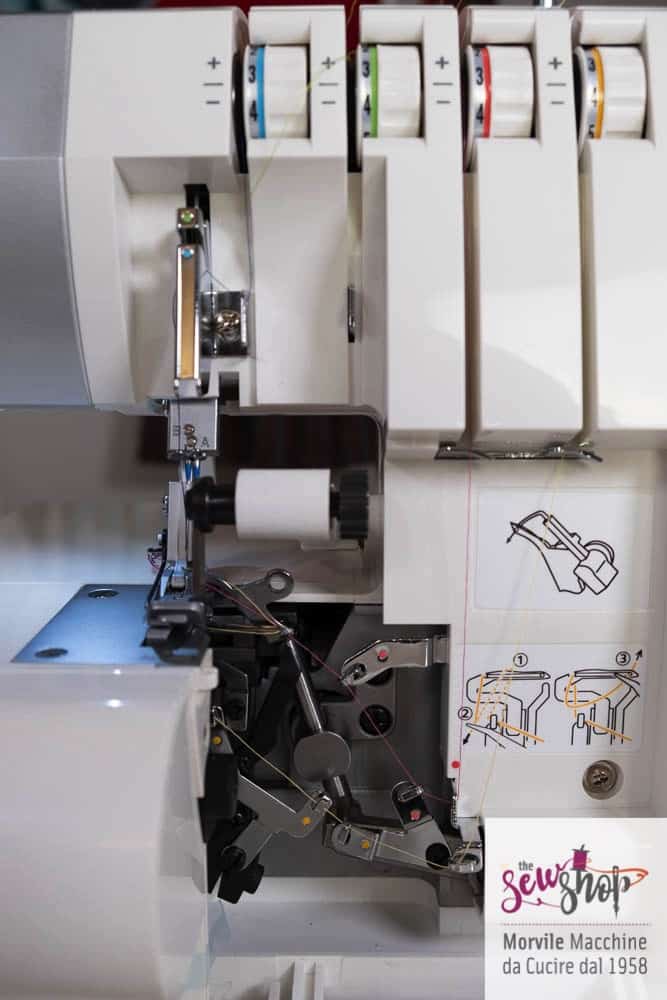
The threading path is often color-coded. Before threading, raise the presser foot, move the needles to their highest position, and lift the cutter—remembering to lower it again. Follow all the thread guides and ensure the threads pass between the tension discs; the chain stitch will only form if the machine is threaded correctly.
Once you have verified the threading, press the foot pedal without any fabric until a chain of about 10 cm extends behind the presser foot. Tension is adjusted using dedicated dials: increasing the needle tension can cause the fabric to pucker, while increasing the lower looper tension can cause the edge to curl. For a rolled hem, the stitch length should also be shortened. Use size 80 needles for standard fabrics and size 90 for heavy fabrics.
Some overlock models not only sew two layers of fabric with an overlock stitch, cut the edge of the fabric to prevent fraying and give that professional finish to your sewing projects, but can perform a variety of other functions.
Combination models, for instance, can create various types of coverstitch. This double-row topstitch is primarily used on the cuffs and hems of knit tops and leggings to cover seams and raw edges. While you can mimic it using a standard sewing machine and a twin needle, the resulting seam will lack the elasticity and durability of a coverstitch produced by a combination machine.
Overlock seams are elastic and durable, remaining stretchy even when the garment is pulled. This makes overlock stitches particularly useful for knitwear and stretch fabrics such as jersey, fine knits, and Lycra. With these materials, differential feed regulates the fabric's movement, helping to prevent rippling and puckering.
Depending on the manufacturer and model, sergers can create flat seams, decorative edging, rolled hems, and other finishes or embellishments. Some can also attach beads, sequins, or cording.
Buying an overlock machine depends on your sewing needs. If you sew rarely or only perform minor repairs, SewShop believes that buying one might not make sense. For instance, some conventional sewing machines can be used with a serger-style presser foot. Alternatively, stitches such as the zigzag can prevent fraying if sewn close to the edge.
If, on the other hand, you sew frequently or want high-quality finishes, a serger is particularly useful—especially when working with modern fabrics. Here are the pros and cons to expect from this type of machine.
Pro
Overlock machines trim excess fabric and create an overlock stitch along the edges in a single pass. They reach speeds of 1,500 stitches per minute, whereas some standard sewing machines top out at around 750–800. The time savings are significant.
These finishing machines provide a professional finish for your sewing projects and are the ultimate in attaching elastic bands professionally.
Sergers offer versatile features, such as decorative edges and rolled hems.
Cons
Threading an overlocker can be a little tricky at first, but it gets easier with practice.
La taglia e cuci non sostituisce la macchina da cucire tradizionale. Ti servirà comunque una macchina per cucire tradizionale per la cucitura dritta, per applicare le cerniere e per eseguire le asole.
Se possiedi già una macchina da cucire convenzionale, l’acquisto di una overlock può sembrare una spesa extra. Considera anche lo spazio necessario per tenere entrambe le macchine.
In conclusion, an overlocker should always be used alongside a normal sewing machine, because it works on the edge and has more limited capabilities than traditional machines. If you are undecided, you can try out a machine belonging to an acquaintance or start with a basic model—making sure, however, to choose one of good quality. Models worth considering include the Pfaff Admire 1000 Serger and the Brother 1034DX Serger.
Having two separate machines might seem expensive. However, owning a serger pays off if you are a professional tailor or seamstress, or if you work on designs that require a professional finish.
The overlocker finishes the inner edges of garments and joins and finishes two fabrics in a single operation. It can also create rolled hems and decorative edges. It is primarily used in garment making, but also for finishing household linens and for creative sewing and patchwork projects. To get started, SewShop suggests beginning with tea towels or napkins before moving on to cushions and curtains.
The serger works on the edge: it trims and overcasts using threads fed directly from cones, without a bobbin. The sewing machine remains indispensable for topstitching, darts, zippers, buttons, and buttonholes. That is why the two machines complement each other rather than replacing one another.
Prepare the fabric pieces with a seam allowance of at least 5–7 mm—which the blade will trim off—and layer them right sides together. You can use pins, taking care to remove them before they reach the blades. Start sewing off the edge of the fabric, guiding it so that the knife consistently trims a small amount off the edge. When finished sewing, leave a thread chain of about 10 cm—and never less than 5 cm—extending from the machine.


