
No products in the cart.
Many people, before purchasing a serger (overlock machine), wonder whether it is truly worth the investment. The answer is yes—for many reasons. Let’s explore what you can do with a serger and who it is best suited for.
65+
Years of experience in the world of sewing
It should be clarified from the outset that a serger (overlock machine) is not a standard sewing machine and cannot replace one. It does not perform simple straight stitching; instead, it finishes edges with a professional look. A 5-thread serger, equipped with a chain stitch function, can also create a structural seam.
Purchasing a overlocker is recommended for everyone, regardless of their level of experience with sewing machines. Naturally, the more experience you have, the easier it will be to learn how to use this tool.
This doesn’t mean you can’t learn to use a serger, even if you’re just starting out in the world of sewing and DIY. Even as a beginner, you can begin with simple projects.

You can do a little bit of everything. The difficulty of the Sewing projects The more experience you gain, the better you’ll be at accomplishing these tasks. Basically, every overlock machine is designed to perform three operations in one go: cutting, sewing, and finishing the edges of your creations.
The first advantage is performing these operations simultaneously, which reduces the number of steps and processing time.
With a traditional sewing machine, you can finish an edge using a zigzag stitch or other suitable stitches. However, it generally does not trim the fabric as it sews—unlike a serger, which uses an active blade—making the process slower and more laborious.
The overlocker work on the edge of the fabric. One or two needles form the stitch, while a knife trims the excess edge. The upper crochet forms part of the visible rings on the edge, while the lower crochet completes the interlacing on the opposite side. To follow each step in detail, find a dedicated guide on How the sizing and sewing work.
Threading follows the model’s diagram, passing through all guides and tension discs. The machine must be switched off before working near needles or blades. For machines falling within its scope, European safety requirements are established by Regulation (EU) 2023/1230, which generally applies from January 20, 2027.
2, 3, 4 or 5 thread overlocker
This type of overlock sewing machine is available with various options, depending on the number of threads used for stitching. The types of finishes that can be achieved vary precisely according to the number of threads employed.
This machine produces a 4-thread overlock stitch, or a 2-thread edge finish suitable for very lightweight materials. The 4-thread safety stitch, by contrast, also incorporates a double chain stitch.
The machine can be used to create individual stitches. Specifically, the Pfaff Admire 3000 offers 16 stitch options—using 2, 3, or 4 threads—for overlock, flatlock, rolled hem, and decorative applications, as demonstrated by the Pfaff Admire 3000. With the professional Singer Heavy Duty serger, the 2-thread hem width is either 3.5 mm or 5.7 mm, depending on the needle used.
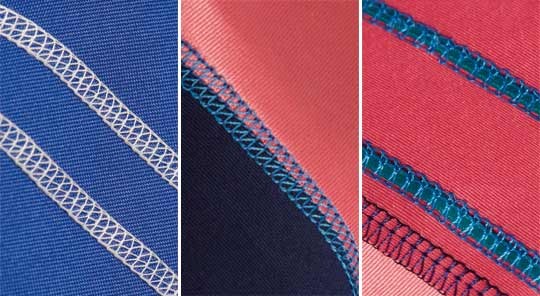
Il s’agit d’une surjeteuse pouvant fonctionner avec trois ou quatre fils. Les deux types de couture conviennent également aux tissus extensibles. La couture à quatre fils est toutefois plus résistante et est notamment utilisée pour les sous-vêtements.
Many of these machines create a rolled hem by moving a small lever.
This type of finish folds the fabric edge downward and encases it in thread. It is ideal for silk, chiffon, and other delicate materials. The Juki MO-644DN serger creates a rolled hem by adjusting a small tab, while the cutting width determines the width of the overedge stitch.
The four-thread stitch is sometimes called a "mock safety" stitch. It possesses much of the strength of a true safety stitch or a separate seam, though not quite the same level.
This machine is in the more expensive range, but it offers the most comprehensive sewing capabilities.
Three threads are used to finish the edge, and two for an internal structural seam, which is, in fact, a chain stitch.
This refers to the stitching on garments where the edge is finished with an overlock stitch, complemented by a straight reinforcing stitch further inward.
In production, this stitch eliminates the need to switch between a sewing machine and an overlocker. It allows for the creation of durable seams and edge finishing in a single step.
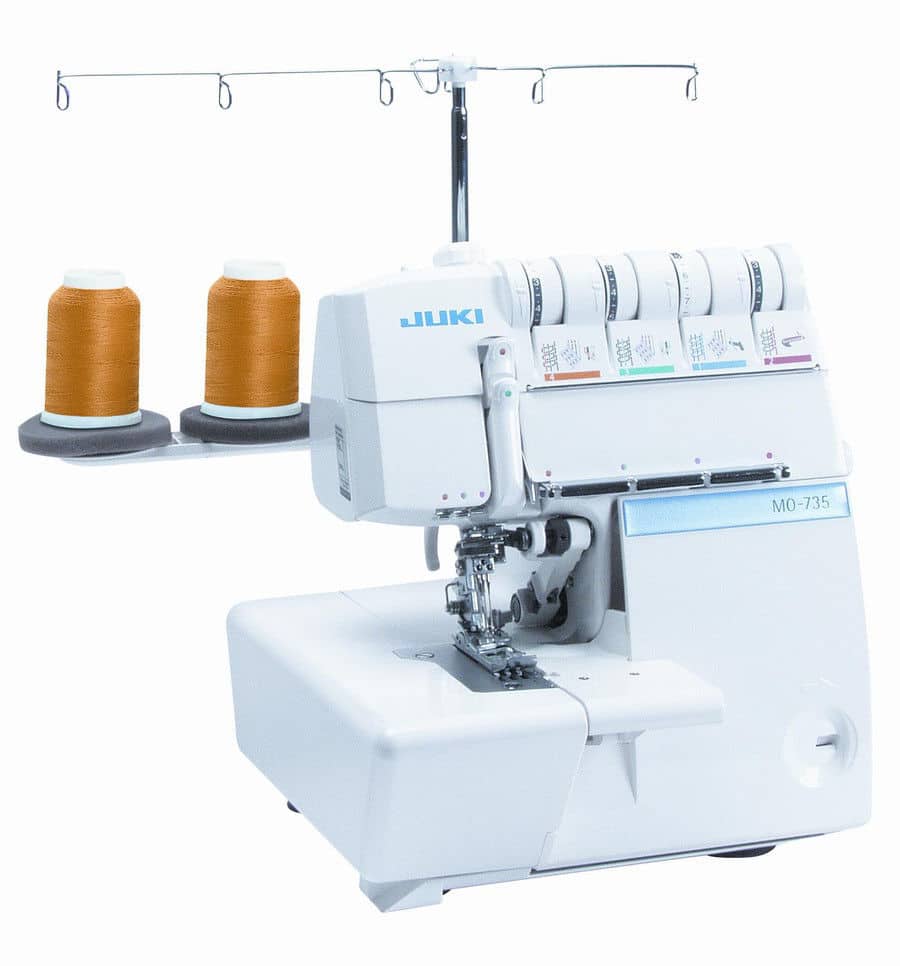
A serger with differential feed offers you more options. Two feed dogs move the fabric at different rates. This allows you to adjust the fabric feed when working with knits or stretchy materials, helping to reduce rippling or stretching.
With a single layer of fabric, a ratio greater than 1 gathers the material and creates ruffles. You can also configure the machine to produce wavy edges, creating a "lettuce-leaf" effect. Tension is a separate setting; it adjusts the balance of the threads within the stitch, working in conjunction with stitch length and presser foot pressure.
On the Pfaff Admire 3000 professional serger, the differential feed helps prevent wavy seams in knit fabrics and puckering in delicate materials. However, the correct setting should always be verified by performing a test stitch on a fabric scrap.
A piece of advice that is always useful when learning to use this type of machine is to start with simple projects and gradually move on to more complex ones.
You could start by adding the finishing touches to a bedspread or household linens, such as dish towels and cloth napkins.
Once you’ve gained a bit of confidence, move on to other types of projects, such as cushions and curtains. The serger can be used for both home textiles and clothing.
The type of fabric you use can also evolve as you become more proficient with the sewing machine. One often-overlooked possibility is the ability to cut and sew very thin, stretchy, or synthetic fabrics, as well as to create gathers or other specialized details.
For materials such as jersey and fabrics used for swimwear and dancewear, an overlock machine yields satisfactory and long-lasting results. When it comes to Lycra, there is no one-size-fits-all setting; the weight, composition, and elasticity of the fabric all influence the outcome.
Some people also use a serger to create decorations and for specific types of stitches, such as flatlock seams. However, the functions and stitches available on each machine may vary depending on the brand and model.
Keep in mind that, as mentioned above, a serger (overlock machine) does not entirely replace a standard sewing machine, which remains essential for certain types of seams.
Before purchasing one, it is worth considering this factor, while also assessing whether the available space is sufficient for both machines.
The time saved, the simplicity of the processes, and the quality of the finishes usually tip the scales in favor of a purchase, regardless of the space available. Sometimes, simply reorganizing the existing space is a more than adequate solution.
It is precisely the hidden finishing details—when executed to a professional standard—that add value to a garment.
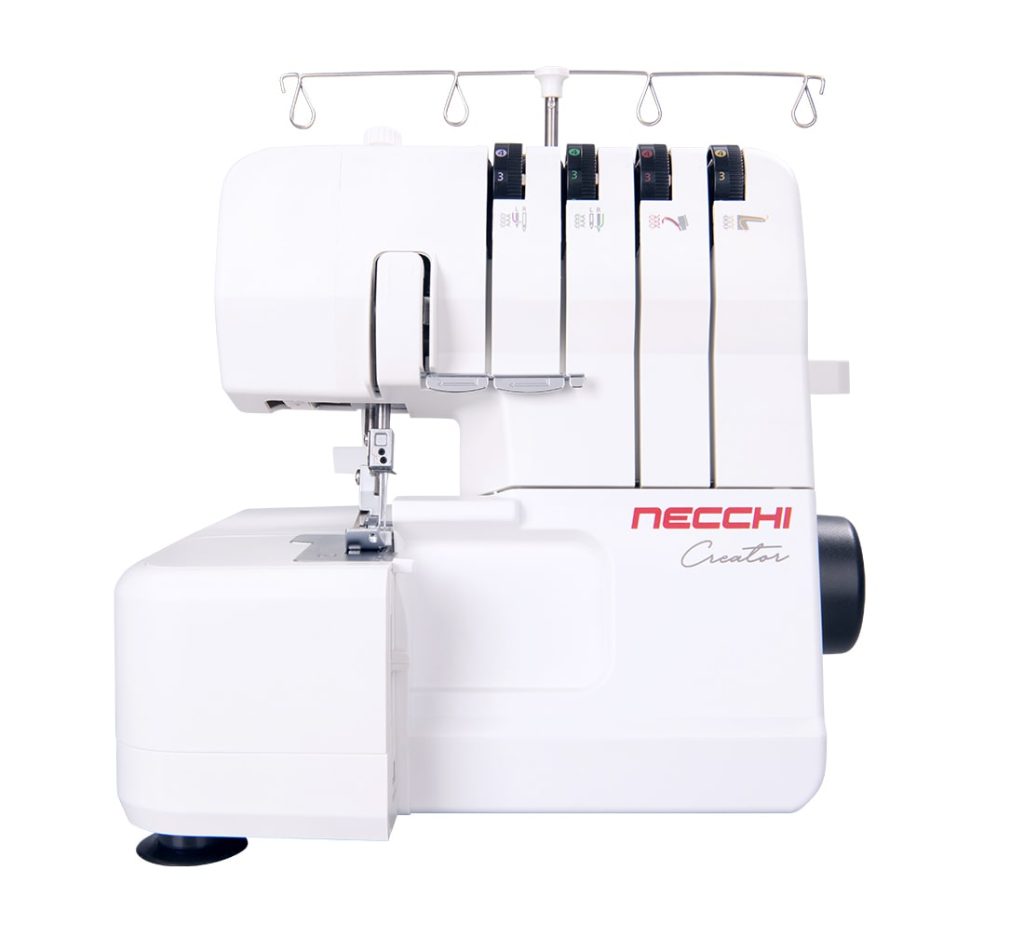
The overlocker finishes the edge and trims the seam allowance with its blade. The cover stitch is a different type of elastic seam, used primarily on knitwear and stretch fabrics.
A 4 thread overlocker is not the same as a coverstitch machine. An overlock stitch finishes the raw edge, whereas a coverstitch creates the parallel rows of stitching typically found on the hems of T-shirts; this requires a dedicated machine or a combination machine that includes this function.
In conclusion, it is advisable to purchase a good-quality serger, even if you are not very experienced. When choosing a serger, consider features such as differential feed, adjustment options, threading, and included accessories; if you wish to sew without trimming the fabric edge, also check that the knife can be disengaged.
The costs for this type of machine are often quite significant, but there are still attractive offers to be found—even among well-known brands and on models suitable for professional or semi-professional use.
If you’re not entirely convinced, you could try out a machine belonging to someone you know, or start with a basic model and upgrade to a more full-featured serger later on.
Alternatively, contact SewShop (with no obligation) via WhatsApp or email; their customer service team will be happy to help you choose the model that best suits your needs.
The chain of threads that forms beyond the edge is not the same as an independent chain stitch. On a 3- or 4-thread serger that lacks this specific function, simply adjusting the tension will not produce it. If the test chain fails to form, check and re-thread the machine according to the instructions before attempting to alter the tension settings.
This stitch sews, trims, and wraps the edge of the fabric with thread, all in a single pass. A 3-thread stitch is primarily used for finishing edges. A 4-thread stitch joins and finishes two pieces of fabric simultaneously for example, when making T-shirts, sweatshirts, or knit leggings.
No, it’s the complete package. Straight stitching, visible topstitching, buttonholes, and attaching buttons are all tasks for a traditional sewing machine. An overlocker is most useful when you frequently need to finish raw edges or sew garments made from jersey fabric.


